Read it first –> Deuteronomy 6 NASB
Let me just start with saying this, for at least 20 years, this has been one of my favorite chapters in the Bible. I read it in the midst of a Bible read-through, and it captured me. It’s held on to my heart and imagination for a long time.
Prior to the fire last year, we actually had this hanging in the front entry of our home. It matters, it binds, it encourages. It gives us a simple holistic view of how we ought to live life Coram Deo (before the face of God, or in the presence of God). Because, if I am living life this way, Coram Deo, it DOES influence everything else.
It influences my thoughts, my words, my choices, my perspective — living Coram Deo, like described in the Shema (Deut. 6:4-9), it becomes the ethos in which we live. (Ethos meaning the character, customs, or guiding beliefs in which frame the spiritual nature of a person or group.)
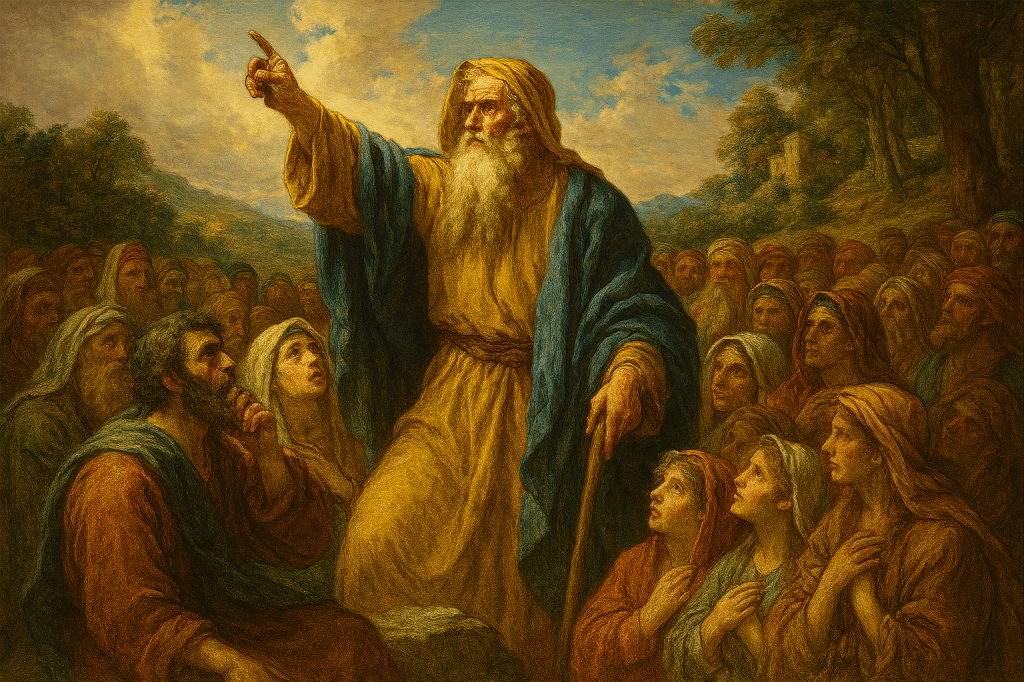
At its heart — the Shema, this passage of Deuteronomy, is about God’s people helping to shape and form God’s people, to pass down the truths God has worked to shape them with Himself. We KNOW this helps. We know the result of kids who haven’t been shepherded, we know how easy it is to forget faithfulness from age to age, generation to generation. Goodness, we live in a world right now that has widely forgotten how gracious the Lord has been to us. We have forgotten to tell the stories. We haven’t spoken of His goodness to the next generation.
Sadly I think I see this both as a teacher, and I saw it as a youth pastor, even a camp counselor. Well-meaning parents, alongside the potential neglectful ones, thought that by sending their kids to “the right stuff”, they would learn the “right things”. But when it wasn’t modeled at home, when it didn’t come from Mom and Dad, we know the sad results… it often feels unnecessary to the kids, and they neglect it and allow the truth they learned to fall to the wayside.
I’ve heard it said that passive learning works — and I think it does — but passive learning is not passive, it takes active preparation for that passive learning to happen. But in that case, passive learning can help kids realize truths without realizing they are indeed being formed by truth. Reality is, even if it appears passive, the Holy Spirit is working alongside the effort of adults to help shape and form.
My own kids, I’ve seen this with scripture songs, I’ve seen this over the centuries with hymns, teaching deep spiritual truth, in song — passively helping us to remember the core of what we believe.
Remember this — if we are not being formed by God and His Word, we are being formed by something else. The Shema is a simple call to be formed and shaped by the Kingdom of God, not kingdom of this earth.
Showing Love
In the beginning of our passage, in verse 5, we see one of the 10 Commandments (from Deut. 5), being expounded upon. But it starts with restating — “Love the Lord your God with all your heart, with all your soul, and all your strength.”
Think about how we show people we love them? (This is a harder question than it used to be… the world has usurped the word “love” to mean a great many things that aren’t accurate).
That said, when we love people — we sacrifice for them, we seek patience, we speak the truth (even when it’s hard), we show ourselves faithful, we are hospitable, we forgive, we pray for one another, we encourage holiness in one another.
But when we turn that to how we show love to God — what do you think?
> We’ve read before that the “fear of the Lord” is important, it’s the beginning of knowledge (Pr. 1:7).
And here’s the beautiful connection: Just as love for people isn’t just warm feelings but involves sacrifice, truth-telling, faithfulness, and pursuing their good — love for God begins with the fear of the Lord.
Fear of the Lord is not terror that drives us away, but reverent awe that includes genuine trembling before His holiness, the kind of fear that draws us near in worship, not the kind that makes us hide.
Simply put — Fear of the Lord includes genuine awe and holy trembling, not servile terror.
The fear of the LORD means:
- Recognizing who God actually IS: the holy, sovereign Creator before whom we stand
- Taking Him seriously: not casually, or flippantly, but with reverent awe
- Submitting to His authority: acknowledging He is Lord and we are not
- Trembling at His Word (Isaiah 66:2): letting Scripture shape us, not the other way around, talk about common today 😦
- Hating what He hates (Proverbs 8:13: “The fear of the LORD is hatred of evil”)
- Delighting in His commands (Psalm 112:1): finding joy in obedience
So How Do We Show God We Love Him?
Through obedient fear:
- Jesus said: “If you love me, you will keep my commandments” (John 14:15)
- John wrote: “For this is the love of God, that we keep his commandments” (1 John 5:3)
- Samuel taught: Fearing the Lord means “serving him in sincerity and in faithfulness” (1 Samuel 12:24)
We cannot truly love God without fearing Him first. Without fear, our “love” becomes presumption, treating God as our buddy, our cosmic therapist, making Him serve our desires rather than us serving His glory. I used to love (still do) the phrase that God is not our cosmic piñata, or cosmic vending machine. We accidentally slip into this mentality without meaning to all the time. The world has quite literally conditioned us for this thinking!
But when we fear Him rightly, with reverent awe that trembles at His holiness and trusts His goodness, our obedience flows from love, not obligation.
Practicing God’s Word & Presence
So what is a practical way we can keep God’s Word and commandments at the forefront of our lives?
Look at what Moses tells us in Deuteronomy 6:6-9. These commandments are supposed to be “on your heart” — and then notice what flows from that:
“You shall teach them diligently to your children, and shall talk of them when you sit in your house, and when you walk by the way, and when you lie down, and when you rise.”
This isn’t about a once-a-week devotional time (though that’s good!). This is about weaving God’s Word into the fabric of ordinary life. When you’re sitting at home, when you’re driving to practice, when you’re tucking kids into bed, when you’re starting your morning — God’s Word should be there, shaping the conversation, forming the way we think and see the world.
Moses goes on: “You shall bind them as a sign on your hand, and they shall be as frontlets between your eyes. You shall write them on the doorposts of your house and on your gates.”
Now, some took this literally (and still do), but the heart of it is this: God’s Word should be so present in our lives that it’s visible everywhere we look. When we enter our homes, when we go out into the world, when we work with our hands, when we see and think — Scripture should be forming us.
Practically, this might look like:
- Scripture on the walls of our homes (like we had before the fire!)
- Memorizing Scripture as a family, hiding God’s Word in our hearts
- Teaching our kids the “why” behind our choices, rooted in Scripture
- Talking about what God’s Word says while we’re living normal life, not just in “spiritual” moments
- Singing truth together, hymns, Scripture songs that passively shape our theology
- Reading Scripture together, praying together, not outsourcing discipleship to the church alone
Here’s the thing: If we’re not intentionally filling our minds and homes with God’s Word, something else will fill that space. The world is constantly discipling us through screens, through culture, through entertainment. We have to be actively counter-cultural in making God’s Word central.
Moses knew this too. That’s why the Shema isn’t just personal piety, it’s trying to create a culture in the home where God’s Word is ever-present, constantly shaping the next generation.
And honestly? Depending on your season of life, if you’re a seasoned adult, this might be the most crucial time to do this. You have the time, the wisdom, the perspective that younger generations don’t have yet. You’ve seen God’s faithfulness over decades. You know what matters and what doesn’t. The church needs you to be faithful in passing down what God has taught you — just like the Shema calls us to do.
This is living Coram Deo. When God’s Word saturates our homes, our conversations, our thinking — we’re living before the face of God, and everything else follows from that.
Belief & Behavior
I know people who have a deep awareness and understanding of God’s Word. They understand theology, they can memorize and recite scripture. But it as though God’s Word hasn’t made the journey from their head, to their heart. It’s sad, hard to watch — because they can best me in knowledge and ability, but their life doesn’t show the fruit of God’s Word taking root.
Which leads me to ask, what does genuine faith look like in the heart of the believer? How does our behavior reflect what we believe about God?
Here’s the uncomfortable truth: Our behavior reveals what we actually believe, not just what we say we believe.
James put it bluntly: “You believe that God is one; you do well. Even the demons believe—and shudder!” (James 2:19). In other words, intellectual agreement with true doctrine isn’t enough. What we truly believe shows up in how we live. Think about it this way: If I say I believe the stove is hot, but I keep putting my hand on it… do I really believe it’s hot? My behavior reveals my actual belief.
Hard Truth: The same is true with God:
- If I say I believe God is sovereign, but I’m constantly anxious and trying to control everything — what do I actually believe?
- If I say I believe God is my provider, but I’m willing to compromise my integrity for financial security — what do I actually believe?
- If I say I believe God is holy, but I’m casual about sin in my life — what do I actually believe?
- If I say I believe God’s Word is true, but I ignore it when it confronts my choices — what do I actually believe?
These are hard questions… they are uncomfortable, but they are helpful too. After all, our behavior is our functional theology.
We might have correct confessional theology, we can recite the creeds, affirm sound doctrine, answer theological questions correctly.
But our functional theology, what we actually believe in the moments when it costs us something — that shows up in our behavior, in the life we are living each and every day.
Jesus said it plainly: “Why do you call me ‘Lord, Lord,’ and not do what I tell you?” (Luke 6:46)
If Jesus is Lord, our lives will show it. If we claim He’s Lord but live however we want, our behavior reveals we don’t actually believe He’s Lord. We might believe He’s Savior (we want the benefits), but not Lord (we don’t want to submit). It hurts to write that. It hurts to go back and read it again. But gracious, we need that hard reality sometimes (daily), to draw us back to the heart of He who made us and redeems us.
Walking in Righteousness
But this matters today as much as it did in Deuteronomy. The Shema calls us, “Love the LORD your God with all your heart, with all your soul, and with all your strength.”
Compartmentalized faith doesn’t work (Sunday morning religion that doesn’t touch Monday through Saturday). We need all-encompassing love that transforms everything: our thoughts, our words, our choices, our relationships, our money, our time.
When we truly believe God is who He says He is:
- We obey, even when it’s hard
- We trust, even when we can’t see
- We worship, even in suffering
- We forgive, even when we’re hurt
- We give generously, even when resources are tight
- We speak truth, even when lies are easier
- We pursue holiness, even when sin is tempting
>> We live counter-culturally — even when we look weird!
Paul warns about people “who profess to know God, but they deny him by their works” (Titus 1:16).
So ask yourself: What does my behavior say about what I believe about God?
- Does my anxiety reveal I don’t really trust His sovereignty?
- Does my materialism reveal I don’t really believe He’s my treasure?
- Does my unforgiveness reveal I don’t really grasp His grace to me?
- Does my prayerlessness reveal I don’t really believe He listens and acts?
This is NOT legalism or earning salvation — we’re saved by grace through faith alone. But genuine saving faith produces genuine transformation. “Faith apart from works is dead” (James 2:26).
Living coram deo changes everything, when we truly grasp that we live every moment before the face of God, that He sees, knows, and cares about every thought, word, and deed, it transforms our behavior. Not out of fear of punishment (there’s no condemnation for those in Christ!), but out of love, reverence, and desire to glorify the One who saved us.
The journey from head to heart happens when God’s Word doesn’t just fill our minds, but changes what we love — then when we begin to love what God loves, hate what God hates, we find our joy in His glory rather than our own comfort and pride.
Wrap Up
So where does this leave us?
We started by talking about living Coram Deo — before the face of God. We’ve seen that this isn’t just a nice theological concept to hang on our walls (though I’m grateful we had it in our home). It’s a call to let God’s Word saturate every corner of our lives.
The Shema isn’t asking us to add God to our already-full lives. It’s calling us to recognize that God is already there — in every moment, every conversation, every choice. The question is: are we living like it?
- Are we being formed by His Word, or by something else?
- Are we showing love to God through reverent obedience, or treating Him like a cosmic vending machine?
- Are we weaving Scripture into the fabric of our daily lives, or compartmentalizing our faith to Sunday mornings?
- And here’s the really searching question: Does our behavior match what we say we believe about God?
This matters. Not just for us, but maybe even more for the generations watching us. They’re learning what genuine faith looks like. Theological answers are great, but more importantly from our lives. They’re seeing whether God’s Word has traveled from our heads to our hearts.
Brothers and sisters, we have an incredible opportunity — and responsibility. Whether you’re raising kids, discipling grandchildren, mentoring younger believers, or simply living faithfully among your peers — your life is a testimony to what you truly believe about God.
The Shema has captured my heart for 20 years because it’s so beautifully simple and so comprehensively demanding. Love God with everything. Let His Word shape everything. Pass it on to everyone.
That’s living Coram Deo.
 Brian Maloy
Leave a comment