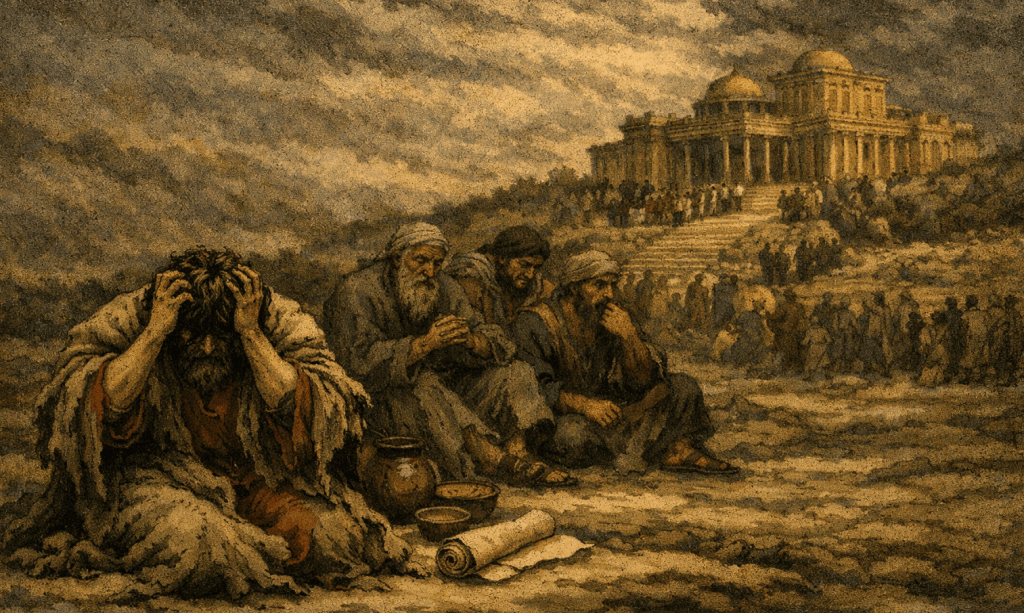
Week 4 — we covered Ezra 9-10. Below is the Audio to listen to lesson, the transcript to read (unedited), and the auto-generated summary.
Audio Recording
Summary (auto-generated)
Opening Prayer & Fellowship
- The meeting began with a prayer asking God for wisdom as the group studies the final chapters of Ezra, focusing on “the idea of holiness and the costliness of repentance.”
Study Overview: Ezra 9‑10
Main Narrative (Ezra 9)
- Problem: Israelite leaders and people have intermarried with surrounding nations, adopting “detestable practices.”
- Ezra’s Reaction: Tears his tunic, pulls hair from his head and beard, and falls into deep grief.
- Prayer of Confession (vv. 6‑15):
- Acknowledges ancestral guilt and current shame.
- Recognizes God’s continued grace despite Israel’s failures.
- Pleads for mercy, fearing divine anger and destruction.
Main Narrative (Ezra 10)
- Community Response: Large assembly weeps; Seconiah proposes a covenant to separate from foreign wives and children.
- Implementation:
- Oath taken by priests, Levites, and the people.
- Proclamation for all exiles to gather in Jerusalem within three days.
- Systematic investigation led by family heads, carried out over several months (approx. Dec 15 – Mar 15).
- Outcome: The community undertakes a costly, orderly process of repentance, emphasizing careful, case‑by‑case handling rather than a blanket decree.
Key Themes
1. Holiness vs. Cultural Conformity
- The Israelites repeatedly chose to “blend in” with surrounding cultures, rejecting the call to be “set apart.”
- Modern parallel: students and adults often prioritize convenience, comfort, or social acceptance over distinct, holy living.
2. Costly Repentance
- True repentance involves painful, concrete actions (e.g., separating from foreign spouses) rather than mere confession.
- The process is descriptive of God’s heart, not a prescriptive formula for modern practice.
3. Grief Over Sin
- Ezra’s intense grief models a proper response: sorrow that drives one to the Lord rather than to excuses or defensiveness.
- Suggested personal responses to sin: confession, humility, and reliance on Christ’s work.
4. Influences Shaping Faith
- Relationships, media, and habitual patterns subtly pull believers away from God.
- The “mere exposure effect” shows how repeated exposure normalizes undesirable influences.
Practical Applications & Discussion Questions
- Self‑Examination:
- How seriously do you take your own sin in daily life?
- What place does the pursuit of holiness hold amid your routines?
- Influence Awareness:
- Identify relationships, media, or habits that may compromise your devotion.
- Response to Sin:
- Do you tend to make excuses, minimize, or avoid confronting sin?
- How can you cultivate a grief‑filled, repentant heart like Ezra’s?
- Community Repentance:
- How can the church create space for patient, thoughtful repentance?
- In what ways can leaders balance swift action with compassionate nuance?
Teaching Reflections
- Format Adjustments: Plans to use larger fonts for discussion questions and leave space for note‑taking on handouts.
- Resource Insights:
- Andrew Murray’s Holiness (“No one becomes holy by accident”).
- Commentary on “detestable practices” (toibot) clarifies the severity of idolatrous behaviors.
- Classroom Dynamics:
- High‑school students often exhibit “perpetual rudeness” and a desire to blend in; middle‑schoolers are “brutal” yet insecure.
- Emphasis on making the Bible a habit/hobby to shape daily rhythms.
Closing Prayer
- The session concluded with a prayer asking God to help the group confront sin, align habits with Scripture, and remain loyal to Christ.


Leave a Reply