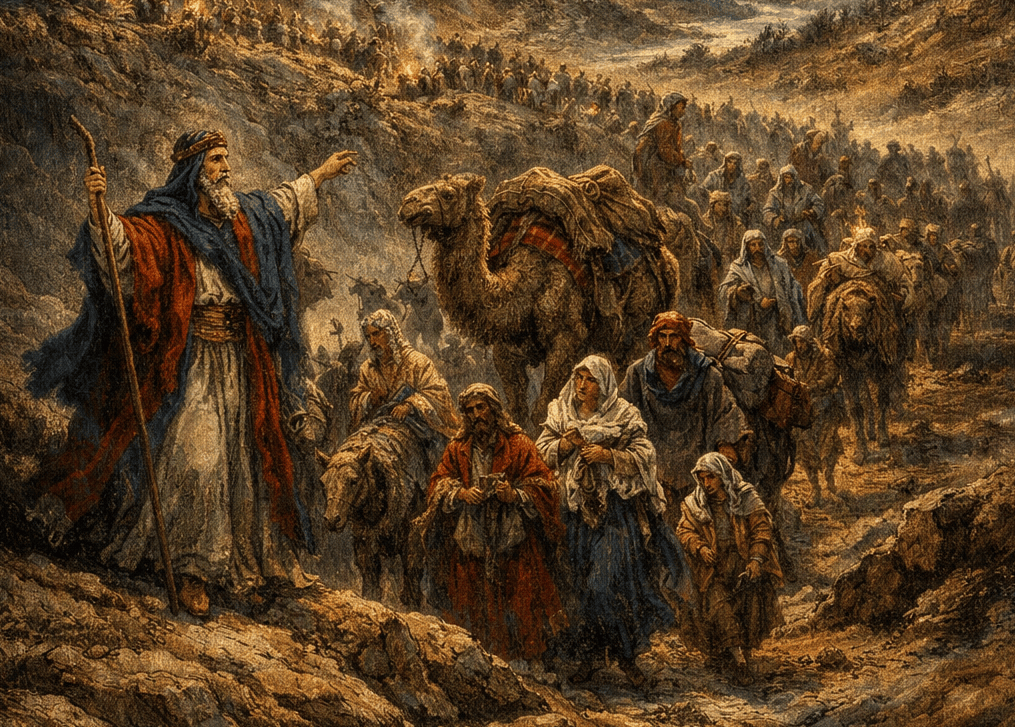
Week 3 — we covered Ezra 7-8. Below is the Audio to listen to lesson, the transcript to read (unedited), and the auto-generated summary.
Audio Recording
Summary (auto-generated)
Opening Prayer and Purpose
- The meeting began with a prayer thanking God for mid‑week fellowship, the chance to study His Word, and for those who gave their time.
- The goal: deepen understanding of God’s heart, kingdom, and how Scripture shapes our view of the world.
Reading Plan and Key Passages
- Focus on Ezra chapters 7‑8 (verses 1‑10, 11‑28, and select genealogies).
- Handouts contain the core verses; participants were reminded to bring Bibles for the additional passages.
- Central question introduced: “What truly sits at the center of your decision‑making?”
Ezra’s Background and Heart
- Lineage: Ezra is traced back to Aaron, the first high priest, establishing his priestly authority.
- Role: Skilled scribe in the law of Moses; granted all his requests by King Artaxerxes because “the hand of the Lord was on him.”
- Heart: Verse 10 – Ezra determined in his heart to study, obey, and teach the law. This resolute devotion is highlighted as his defining characteristic.
King Artaxerxes’ Decree and Authority
- The king authorizes Ezra to:
- Lead Israelites back to Jerusalem.
- Collect and transport silver, gold, and offerings for the temple.
- Appoint magistrates and judges to enforce both the law of God and the king’s law.
- Ezra is given extensive resources (e.g., 7,500 lb of silver, 500 bushels of wheat) and is instructed not to tax priests, Levites, or temple servants.
- Ezra’s doxology (verses 27‑28) praises God for enabling the king’s support and for strengthening Ezra’s courage.
Themes Discussed
Decision‑Making and the Heart
- Heart vs. mind: Setting one’s heart on a purpose (Ezra’s mission) yields perseverance, whereas a merely mental plan leads to disappointment when circumstances change.
- Personal illustration: choosing ice‑cream flavors demonstrates the difference between a fleeting desire and a steadfast commitment.
Stewardship of Influence
- Ezra’s influence is vast (spiritual and logistical).
- Questions raised:
- What does faithful stewardship of influence look like today?
- How should believers handle power and authority in a way that honors God?
Gratitude and Doxology
- Emphasis on habitual praise (doxology) for both great and everyday blessings.
- Practical suggestions: keep gratitude journals, thank God for small moments (e.g., a good parking spot, a smooth traffic light).
- Connection to modern psychology: gratitude rewires the brain, fostering resilience and a growth mindset.
Application and Reflection Questions
- Center of Decision‑Making: What shapes your choices and priorities?
- Faithful Influence: How can you steward any influence you have responsibly?
- Gratitude Practice: How might you recover a habit of daily doxology?
- Personal Growth: Where do you need to pause, humble yourself, and seek God’s direction before moving forward?
Personal Anecdotes (Illustrative)
- The speaker shares stories about:
- Discovering a new love for Hosea after previously finding it “dry.”
- Family genealogy research and its spiritual significance.
- Everyday gratitude moments (IKEA bookcase, a favorite chair, a long traffic light).
- The importance of making Scripture a “hobby” and central focus in life.
Closing Prayer
- A final prayer asked for:
- Humility like Ezra’s fasting by the Ahava River.
- A hunger for God’s Word to become the central “hobby.”
- Transformation through continual engagement with Scripture.
Takeaway: Ezra’s unwavering devotion to God’s law, empowered by divine favor and royal authority, serves as a model for setting our hearts on God’s purposes, stewarding influence faithfully, and cultivating a grateful, Scripture‑centered life.


Leave a comment